

Executive function coaching is a short-term, skills-and-systems intervention that helps adults build planning, organization, and time-management routines. It targets the specific cognitive processes that make daily life feel unmanageable: missed deadlines, forgotten tasks, and the inability to start or finish what matters. CHADD describes it as a practical, client-driven service focused on planning, goal setting, organization, and problem solving. The APA's clinical guidance and practitioners like Paulina Ellis at Neuroscience Coaching use structured frameworks to help clients build lasting systems rather than patch individual failures.
Most programs run 12 sessions over roughly three months. That length is not arbitrary: a manualization study from Oxford Brookes (ACE-MI) identified 12 sessions as a commonly used engagement length and a practical window for producing habit change in adults.
After a full program, clients typically report:
- Clearer daily and weekly routines
- Reduced time lost to decision paralysis or task avoidance
- Stronger accountability to their own goals
- A personalized system they can maintain independently
Key Takeaways
Executive function coaching works best as a structured, 12-session engagement that builds personalized planning and organization systems for adults with ADHD or other neurodivergence.
| Point | Details |
|---|---|
| Typical program length | A 12-session, roughly three-month package is the most commonly used format in adult coaching research and practice. |
| Who benefits most | Adults with ADHD, neurodivergent professionals, founders, and caregivers struggling with planning, time management, or routine. |
| Coaching vs. therapy | Coaching builds skills and systems; therapy addresses emotional root causes. Both can run concurrently when clinically appropriate. |
| Cost and coverage | Most U.S. coaching is private-pay; CHADD notes it is generally not covered by traditional health insurance. Check FSA/HSA and employer benefits. |
| Paulinaellis and CHADD | Paulinaellis offers neuroscience-informed one-to-one coaching online; CHADD is a leading U.S. resource for ADHD coaching guidance and provider vetting. |
Table of Contents
- What executive function coaching actually targets
- What does an executive function coach actually do?
- Who benefits from executive function coaching?
- How does executive function coaching work in practice?
- How to choose an executive function coach
- What to expect in your first session
- What does the evidence say about coaching outcomes?
- Neuroscience Coaching with Paulina Ellis: who it's for and how it works
- What realistic progress actually looks like
- Neuroscience Coaching: what to expect and how to book
- Sources
What executive function coaching actually targets
Executive functions are the cognitive skills that let you plan, regulate your attention, and adapt when things change. The Harvard Center on the Developing Child describes them as the brain's "air traffic control" system: managing competing demands, sequencing actions, and keeping long-term goals in view while handling immediate pressures.
The core skills coaching addresses:
- Working memory: Holding information in mind while using it
- Planning and prioritization: Deciding what matters and in what order
- Task initiation: Starting tasks without excessive delay
- Sustained attention: Staying focused through low-interest work
- Inhibitory control: Resisting impulses and distractions
- Cognitive flexibility: Shifting between tasks or adjusting when plans change
- Time management: Estimating, tracking, and allocating time accurately
- Organization: Managing physical space, files, and information systems
A practical example: someone with weak task initiation and poor time estimation might consistently underestimate how long a report takes, start it the night before it's due, and then feel flooded by anxiety. The Cleveland Clinic notes that these patterns in adults often show up as chronic lateness, difficulty managing finances, and trouble following multi-step instructions. Coaching targets the underlying skill gap, not just the symptom.
What does an executive function coach actually do?
Coaching is not therapy, and it is not tutoring. The MGH Clay Center is clear on this: coaching focuses on skill and habit development, not on processing emotional history or teaching academic content. A coach works with you to build systems that fit your brain, then holds you accountable to using them.
Core coaching activities include:
- Collaborative goal setting: Identifying 2–3 concrete, measurable goals for the engagement
- Systems and structure design: Building calendars, routines, and workflows tailored to your energy patterns
- Time-blocking: Scheduling specific tasks into protected time slots
- Accountability check-ins: Brief between-session messages or calls to track follow-through
- Environmental adjustments: Reducing friction in your physical or digital workspace
- Skills practice: Rehearsing specific strategies until they become automatic
The APA's coaching framework documents several tools coaches use in practice: the Eisenhower Matrix for prioritization, the ADHD Life Wheel for assessing life-area balance, Task and Dump exercises for clearing cognitive load, and structured decision-making tables. These are not generic productivity hacks. They are adapted for how neurodivergent brains actually process information and manage energy.
The distinction from therapy matters. Therapy addresses emotional root causes, trauma, and mood disorders. Coaching assumes the client is fundamentally capable and focuses on building the external scaffolding and internal habits that let that capability show up consistently. If emotional barriers keep blocking skill uptake, a good coach will recognize that and coordinate with a therapist rather than try to work around it.
Pro Tip: Before committing to a coach, ask them to walk you through a specific session example. A coach who can describe exactly what happened in a session, what tool they used, and what the client did differently afterward is one who actually works from evidence, not intuition.
Who benefits from executive function coaching?
The clearest candidates are adults who know what they need to do but consistently struggle to do it. That gap between intention and execution is the signature of executive function difficulty, and it shows up across a wide range of people.
Coaching tends to be a strong fit for:
- Adults with ADHD or other neurodivergence: Planning, time management, and organization are the most commonly reported challenges, and coaching directly targets these
- Neurodivergent professionals and founders: High-stakes roles amplify EF demands; sustainable systems become non-negotiable
- Caregivers supporting children or young adults: Parents can work with coaches on their own strategies and learn how to coordinate with schools or clinicians
- Professionals in transition: New roles, promotions, or life changes that overwhelm existing routines
- Anyone repeatedly missing deadlines or feeling buried by planning tasks
Coaching is appropriate when the primary issue is skill and system gaps. If the primary issue is a mood disorder, trauma, or significant anxiety, therapy should come first. Coaching can run alongside therapy once emotional stability is in place, but it is not a substitute for clinical mental health treatment.
For caregivers specifically, coaching can include parent-focused strategies: how to structure a household routine, how to communicate with a child's school team, and how to manage your own cognitive load while supporting someone else's.
How does executive function coaching work in practice?
Most coaching happens weekly, in sessions running 45–60 minutes. Remote delivery via video is now standard and works well for most clients; some coaches offer in-person sessions, and many include brief check-in messages between sessions to maintain momentum.
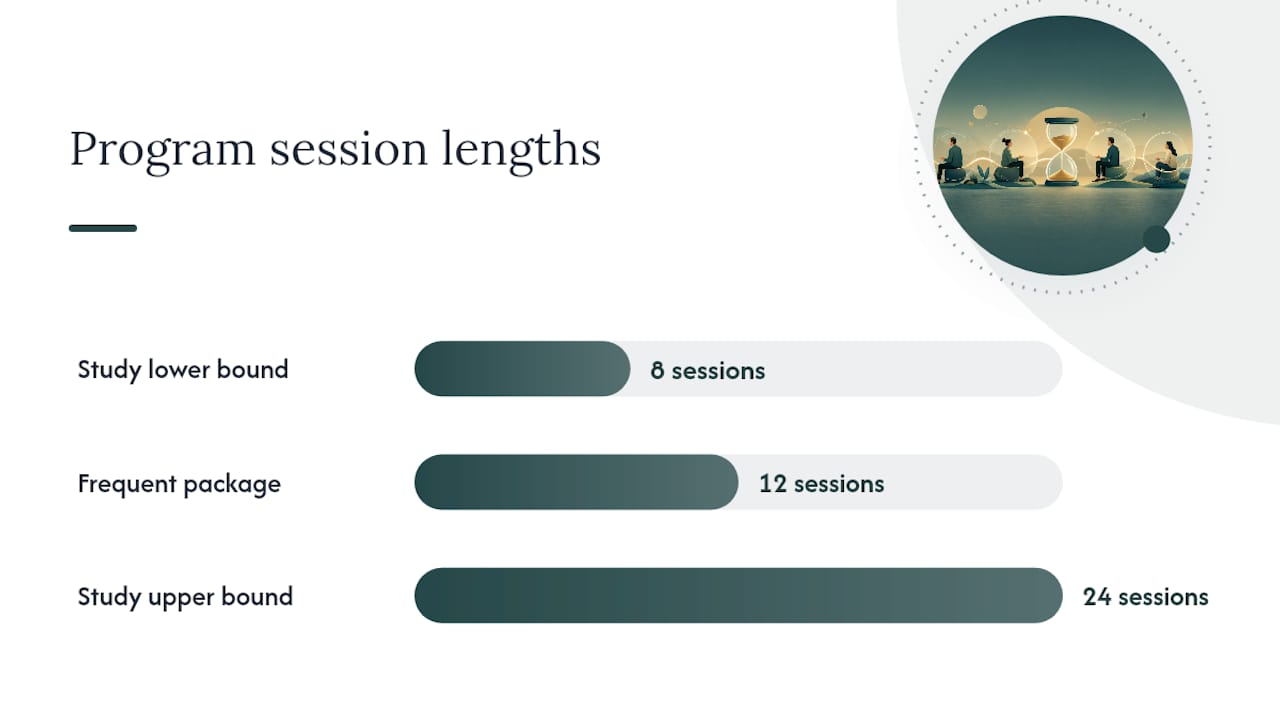
APA research materials document that coaching studies typically involve 8–24 sessions in adult and college samples, with many programs clustering near 12 sessions. The ACE-MI manualization project specifically identified a 12-session, three-month model as a practical engagement length for producing habit change. Three months is widely considered the minimum window to establish new routines and observe consistent improvement in daily functioning.
12 sessions over roughly 3 months is the most commonly used coaching package length in adult ADHD coaching research and practice, per the ACE-MI manualization study.
Before you book, ask these questions:
- How many sessions are in the package, and what happens if I need more?
- What does a typical session look like, start to finish?
- How do you track progress between sessions?
- Do you offer a trial session before a full package commitment?
- What is your cancellation or refund policy?
- Do you offer sliding-scale pricing or payment plans?
On cost: most executive function coaching in the U.S. is private-pay. CHADD notes that coaching is generally not covered by traditional health insurance. That said, some employers offer coaching through employee assistance programs, and FSA or HSA funds may be applicable depending on how the service is categorized. Always verify with your benefits provider before assuming coverage.
How to choose an executive function coach
Credentials in this field are not standardized the way medical licenses are, which means the quality gap between coaches is real. The MGH Clay Center recommends vetting coach credentials and experience carefully before committing.
Look for:
- Relevant experience with neurodivergent adults: Ask specifically about ADHD, autism, or other neurodivergence, not just general coaching
- Neuroscience or EF-specific training: Familiarity with neuroplasticity, cognitive load, and energy management signals a more grounded approach
- Clear package descriptions: Session count, goals, and milestones should be spelled out before you sign anything
- Transparent pricing and contract terms: No vague "ongoing" arrangements without defined endpoints
- Client references or case examples: Anonymized is fine; the coach should be able to describe measurable progress
Questions to ask in an initial consultation:
- What does your session structure look like?
- Do you assign homework between sessions?
- How do you measure client progress?
- Can you share an anonymized example of a client outcome?
- What is your policy if I need to pause or end early?
Red flags worth walking away from: vague guarantees ("you'll be transformed"), no clear session plan, pressure to commit to a long package without a trial session, and an inability to describe how they track outcomes.
Pro Tip: Ask for one short, anonymized case example showing measurable client progress and how it was tracked. A coach who can answer that question specifically, with a concrete before-and-after, is demonstrating the kind of accountability they will bring to your sessions.
What to expect in your first session
The first session is mostly intake and orientation. Expect it to feel more like a structured conversation than a coaching session proper. A good coach uses this time to understand your current routines, your biggest friction points, and what you actually want to change.
Common first-session elements:
- Intake questions: Current routines, work demands, sleep, and prior attempts at organization
- Goal-setting: Narrowing from "I want to be more organized" to two or three specific, measurable targets
- Baseline audit: A quick review of your calendar, task list, or a recent week to identify patterns
- Tools overview: A brief introduction to one or two tools you will use in the program
- Agreement on cadence: Session frequency, check-in format, and what "homework" looks like
To get the most from it, bring your calendar, a recent example of a task or deadline you missed or nearly missed, and a rough sense of your top one to three priorities. You do not need to have it figured out. The point of the first session is to figure it out together.
After that first meeting, you should leave with clarity on one concrete next step, an agreed check-in rhythm, and a sense of whether this coach's style fits how you think.
What does the evidence say about coaching outcomes?
The research base for executive function coaching is growing, though it is still maturing. Studies consistently show positive outcomes in time management, organization, and self-reported daily functioning for college students and adults, particularly those with ADHD. CHADD positions coaching as a practical complement to medication and other clinical treatments, not a replacement for them. The APA's clinical resources document case studies and session frameworks that support coaching's effectiveness for adults.
The honest caveat: large-scale randomized controlled trials specifically for individual adult coaching remain limited. The ACE-MI project was developed partly to address this gap by standardizing a 12-session model that could be tested more rigorously. The evidence base is coherent and growing, but it is not yet at the level of a fully manualized, widely replicated clinical trial.
What the research does support:
- Coaching produces consistent gains in self-reported organization and time management
- Programs of 8–24 sessions show positive outcomes; 12-session packages appear frequently across studies
- Coaching works best alongside, not instead of, medication or therapy when those are clinically indicated
- Client-driven, collaborative approaches outperform generic productivity instruction
Coaching studies typically involve 8–24 sessions, with many adult programs clustering near 12 sessions, per APA sample materials and the ACE-MI literature review.
The complementarity point is worth emphasizing. CHADD and APA guidance both note that coaching addresses skill and system gaps, while medication manages neurological symptoms and therapy addresses emotional barriers. A client on medication who still struggles with planning and follow-through is a strong candidate for coaching. Someone whose anxiety is so severe it prevents them from engaging with any structure needs therapy first.
Neuroscience Coaching with Paulina Ellis: who it's for and how it works
Paulinaellis offers one-to-one neuroscience-based coaching for neurodivergent professionals, founders, and senior leaders. The work is grounded in neuroplasticity and cognitive pattern recognition: understanding how your brain actually processes demands, manages energy, and builds habits, then designing systems that work with those patterns rather than against them.
Program options include:
- Single sessions: For targeted problem-solving or a first look at your current systems
- Four-session packages: A focused sprint on one area, such as time management or decision-making
- Founder-specific sprints: Designed for the particular cognitive demands of building and leading a business
- Multi-session programmes: Longer engagements for sustainable habit change and career structure
All sessions are delivered online, which means location is not a barrier.
The neuroscience framing is not decorative. Sessions draw on an understanding of cognitive load, energy management across the day, and how neuroplasticity shapes habit formation. Goals are set in concrete, measurable terms, and progress is tracked session to session. The focus is on building systems you can maintain independently, not on creating dependency on the coach.

Paulinaellis's approach is particularly well-suited to professionals who have tried generic productivity systems and found them unsustainable. The boom-bust cycle of intense productivity followed by burnout is a specific pattern that neuroscience-informed coaching is designed to interrupt.
What realistic progress actually looks like
Most people come to executive function coaching expecting a faster version of what they have already tried: a better planner, a stricter schedule, a more disciplined version of themselves. That framing sets them up for disappointment.
What coaching actually produces is slower and more durable. In the first few sessions, you get clarity: a cleaner picture of where your time actually goes, which tasks drain you disproportionately, and which systems you have been forcing yourself to use despite the fact that they do not fit how you think. That clarity alone is worth the investment for many clients.
The habit change comes later, usually around weeks six through ten. That is when the new structures start to feel less effortful, when you catch yourself using the system without being reminded. Three months is the minimum to reach that point with any consistency. Expecting transformation in four sessions is like expecting fluency in a language after two weeks of lessons. The timeline is not a flaw in the method; it is how brains actually change.
Coaching also does not fix everything. If your job is genuinely incompatible with how your brain works, no amount of time-blocking will make it sustainable. A good coach will tell you that. The goal is not to make you perform better within a broken system. It is to help you build one that actually works.
Neuroscience Coaching: what to expect and how to book
If you have been managing executive function challenges with willpower and generic productivity advice, and it keeps not working, that is not a character flaw. It is a systems problem, and systems problems have systems solutions.
Paulinaellis offers one-to-one coaching built specifically for neurodivergent professionals who need something more precise than a planner recommendation. Sessions are online, packages are clearly structured (single sessions, four-session packages, and founder sprints), and pricing is transparent. There are no open-ended retainers or vague commitments.
The concrete next step: visit Paulinaellis to review the program options and book a discovery session. Come with your calendar and one specific challenge you want to work on. That is enough to get started.
Sources
The following sources were used throughout this article and are worth consulting directly for deeper research or provider vetting:
- Coaching - CHADD
- Development of a Manualized Coaching Intervention for Adult ADHD (ACE‑MI) — IJEBCM / Oxford Brookes
- A Guide to Executive Function: What is it, and how is it developed? — Harvard Center on the Developing Child
- ADHD Coaching, Second Edition — APA Books
- What Is Executive Function Coaching? | MGH Clay Center
- Executive function — Cleveland Clinic